
Laboratory Products
Math Lab Equipment
Biology Lab Equipment
Chemistry Lab Equipment
Hospital Lab Equipment
Water and Sanitation
Physics Lab Equipment
Engineering Lab
Science Lab Equipment
Scientific Lab Equipment
Analytical Lab Equipment
TVET Lab Equipment
- Workshop Tools
- Electrical Work Bench
- Standard Welding Equipment Set
- Welding Equipment and Workshop Lab Machine
- Plant Engineering and Welding Equipment
- Wood Workshop Portable Tool
- Woodworking Workshop Machines
- CNC Trainer Machine
- Automobile Engineering
- Plumbing Workshop Instrument
- Theory of Machine Lab Equipments
- Concrete Laboratory
- Soil Mechanics
Microscope Equipment
Lab Glassware
- Watch Glasses Soda
- Voltameter
- Stirrers
- Test Tubes and Thermometer Pockets
- Staining Jars
- Specimen Tubes and Vials
- Spirit Burners
- Screwthreads, Discs and Joints
- Screw Caps, Stoppers and Stopcocks
- Pipettes, Volumetric Flasks and Measuring Cylinders
- Funnels
- Funnels Dropping Separating
- Flasks
- Distillation
- Extractors
- Coplin Jars
- Condensers
- Chromatography Columns
- Burettes
Educational Lab Equipment
Lab Equipment
Theory of Machines Products Manufacturer, Suppliers and Exporter in India
Educational Instrument is leading Theory of Machines Products Manufacturer,and supplier and Exporter in India, Algeria (Algiers), Angola (Luanda), Argentina (Buenos Aires), Armenia (Yerevan), Australia(Canberra), Austria (Vienna), Bahrain (Manama), Bangladesh (Dhaka), Bhutan (Thimphu), Bolivia (Sucre), Botswana (Gaborone), Brazil (Brasília), Brunei (Bandar Seri Begawan), Montenegro (Podgorica), Morocco (Rabat), Mozambique (Maputo), Myanmar (Naypyidaw), Namibia (Windhoek), Nepal (Kathmandu), New Zealand (Wellington), Nigeria (Abuja), Oman (Muscat), Palestine (Ramallah), Panama (Panama City), Papua New Guinea (Port Moresby), Paraguay (Asunción), Peru (Lima), Philippines (Manila)¸ Portugal (Lisbon), Qatar (Doha), Rwanda (Kigali), Saudi Arabia (Riyadh), Senegal (Dakar), Serbia (Belgrade), Sierra Leone (Freetown), Slovakia (Bratislava), South Africa (Cape Town) (Pretoria) (Bloemfontein), South Sudan (Juba), Spain (Madrid), Sri Lanka (Sri Jayawardenepura Kotte) (Colombo), Sudan (Khartoum), Syria (Damascus), Tanzania (Dodoma), Thailand (Bangkok), Togo (Lomé), Tonga (Nuku'alofa), Trinidad and Tobago (Port of Spain), Tunisia (Tunis), Turkey (Ankara), Turkmenistan (Ashgabat), Uganda (Kampala), United Arab Emirates (Abu Dhabi), United Kingdom (London), United States (Washington, D.C.)
Theory of machines products are laboratory apparatus for teaching machine dynamics — vibrations, rotation, balancing, cams, gears, bearings, and contact mechanics — through measured experiments. Mechanical engineering departments at universities, engineering colleges, polytechnics, and TVET institutes use them to connect classroom dynamics theory with observed machine behaviour, and research and industrial training facilities use them for demonstration and testing work. Educational Instrument manufactures and exports the 23-product range from Goregaon, Mumbai, India for institutional and tender supply worldwide.
The catalogue divides into three working groups: vibration apparatus (free, forced, and torsional vibration units, mass–spring and cantilever systems, damper kits, pendulums, whirling of shafts, and a dedicated test frame), rotational dynamics apparatus (governors, centrifugal force, Coriolis force, balancing of reciprocating masses, cam analysis, and geared systems), and bearing and contact apparatus (air bearing, journal bearing, Michell pad, and Hertzian contact units). Most units are bench-mounting; supply is quote-based.
What experiments can you run with theory of machines lab equipment?
This range supports measured experiments in simple harmonic motion, free and forced vibration, torsional vibration, damping, whirling of shafts, governor behaviour, centrifugal and Coriolis forces, balancing of reciprocating masses, cam profiles, gear drives, and bearing friction and lubrication. Each unit isolates one dynamics topic for a laboratory session.
Measurement is built into the apparatus rather than added afterwards. Examples from the product descriptions: the Governors unit uses a sensor to measure the lift of each governor sleeve; Free and Forced Vibrations has an accelerometer in the exciter assembly to show the phase relationship between beam displacement and acceleration; and the Air Bearing Apparatus pairs a hand-operated load control with a load cell so students apply and measure load on the bearing bush directly.
How is the vibration apparatus organised?
The vibration group is modular. A Free Vibrations Test Frame lets students, teachers, or lecturers fit experiment parts to study or demonstrate a free-vibrations topic, and the Universal Vibrations Apparatus offers experiments sized for accurate results on a classroom bench. Around these sit single-topic units and add-on kits.
The single-topic units cover the classical progression: Free Vibration of Mass Spring System (linking directly to simple harmonic motion, where restoring force is proportional to displacement), Free Vibrations of Cantilever (beam stiffness replacing spring stiffness), Free Vibration of Beam Spring (a pivoted beam suspended by a coiled spring — a system found in machines and vehicle suspensions), Free Torsional Vibrations (a rod fixed to a freely rotating rotor), and Simple and Compound Pendulums for period-of-oscillation studies. Two damper kits add damping studies: a dash-pot piston-and-cylinder kit for the mass–spring unit, and a Damper Kit that works with easily found non-toxic fluids for different damping levels. Whirling of Shafts and Critical Speed Apparatus completes the group.
Which units cover rotation, balancing, and machine elements?
Seven units cover rotational dynamics and machine elements. The Governors unit measures sleeve lift by sensor; Centrifugal Force and Angular Velocity uses a motor-driven belt and turntable; and the Coriolis Force Apparatus mounts a transparent water tank and counterbalance on a rotating arm over a benchtop base unit.
For balancing and mechanisms, Balance of Reciprocating Masses is a bench-mounting model four-cylinder engine showing primary and secondary forces and moments and how to balance them. The Cam Analysis Machine is built on a precision-machined heavy steel base with a high-torque, direct-drive, variable-speed motor. Geared Systems is supplied with a three-shaft gear drive unit as standard, with a base unit that dynamically tests the gear drive and optional drive units; a separate Acceleration and Static Test Stand adds experiments in angular acceleration and static efficiency. Centre of Percussion has students locate a compound pendulum's centre of gravity to calculate radius of gyration and centre of percussion.
What bearing and contact mechanics apparatus is included?
Four tribology-related units are included. The Air Bearing Apparatus applies and measures bearing-bush load via hand-operated load control and load cell. The Journal Bearing Demonstration is a floor-standing apparatus for studying journal bearing performance under different test conditions — the one unit in the range described as floor-standing rather than bench-format.
The Michell Pad Apparatus is a bench-mounting unit with an aluminium plate (pad) mounted above a continuous-loop flat belt, for tilting-pad lubrication studies. The Hertzian Contact Apparatus lets students rotate the lower pad while a pointer shows the angle of rotation, supporting contact-mechanics coursework. Full specifications for each unit are available on request.
Product types in this category
|
Product type |
Key feature (as stated) |
Typical use |
|
Universal Vibrations Apparatus |
Bench-sized experiments; demonstration-scale accuracy |
Multi-topic vibration teaching |
|
Free Vibrations Test Frame |
Experiment parts fit to a common test frame |
Platform for free-vibration topics |
|
Free Vibration of Mass Spring System |
Direct link to simple harmonic motion |
SHM fundamentals |
|
Free Vibrations of Cantilever |
Beam stiffness replaces spring stiffness |
Cantilever vibration studies |
|
Free Vibration of Beam Spring |
Pivoted beam suspended by coiled spring |
Suspension-type system dynamics |
|
Free Torsional Vibrations |
Rod fixed to freely rotating rotor |
Torsional oscillation experiments |
|
Free and Forced Vibrations |
Accelerometer in exciter shows displacement–acceleration phase |
Forced vibration and resonance |
|
Damper Kit |
Uses easily found non-toxic fluids for damping levels |
Damping studies |
|
Damper Kit for Mass/Spring |
Piston-disc dash-pot fits guide rods under platform |
Damped SHM experiments |
|
Simple and Compound Pendulums |
Tests how mass and length affect SHM period |
Pendulum oscillation studies |
|
Centre of Percussion |
Compound pendulum CG → radius of gyration |
Rotational inertia coursework |
|
Whirling of Shafts and Critical Speed Apparatus |
Shaft whirl and critical speed unit |
Critical speed experiments |
|
Governors |
Sensor measures each governor sleeve lift |
Governor characteristic studies |
|
Centrifugal Force and Angular Velocity |
Motor-driven belt turns turntable under mechanism |
Rotational force experiments |
|
Coriolis Force Apparatus |
Rotating arm with transparent water tank and counterbalance |
Coriolis effect demonstration |
|
Balance of Reciprocating Masses |
Model four-cylinder engine; primary/secondary forces and moments |
Balancing coursework |
|
Cam Analysis Machine |
Heavy steel base; high-torque direct-drive variable-speed motor |
Cam profile analysis |
|
Geared Systems |
Three-shaft gear drive standard; base unit tests optional drives |
Gear drive testing |
|
Acceleration Static Test Stand |
Adds angular acceleration and static efficiency experiments |
Extension to geared systems work |
|
Air Bearing Apparatus |
Hand-operated load control with load cell |
Air bearing load studies |
|
Journal Bearing Demonstration |
Floor-standing; performance under different test conditions |
Journal bearing performance |
|
Michell Pad Apparatus |
Aluminium pad above continuous-loop flat belt |
Tilting-pad lubrication studies |
|
Hertzian Contact Apparatus |
Rotatable lower pad with rotation-angle pointer |
Contact mechanics experiments |
Selection criteria
|
Criterion |
What to check |
|
Topic coverage |
Which dynamics topics your syllabus examines by experiment — vibrations, balancing, cams, gears, bearings |
|
Platform vs single units |
Whether a test frame/universal apparatus plus modules, or standalone single-topic units, fits your course structure |
|
Format and floor space |
Most units are bench-mounting; the Journal Bearing Demonstration is floor-standing |
|
Add-on kits |
Damper kits and the Acceleration Static Test Stand extend base units — order together where relevant |
|
Built-in measurement |
Sensors, load cells, accelerometers, and indicators as stated per product page |
|
Specifications |
Detailed specs available on request through product enquiry |
|
Procurement route |
Quote, catalogue request, or institutional/tender supply via the Tenders/OEM page |
Related categories
- Engineering Lab (parent)
- Theory of Machine Lab Equipments (TVET)
- Next Generation Structures Products
- VDAS and Thermodynamics Products
- Engines
- Fluid Mechanics Products
- Control Engineering Products
- Electrical Power Products
- Aerodynamics Equipment for Training
- Thermodynamics and Process Control
Frequently asked questions
What does the theory of machines product range include?
The range includes 23 units across three groups: vibration apparatus (mass–spring, cantilever, beam-spring, torsional, forced vibration, dampers, pendulums, whirling of shafts, test frame, universal apparatus), rotational dynamics apparatus (governors, centrifugal force, Coriolis force, reciprocating-mass balancing, cam analysis, geared systems, acceleration test stand, centre of percussion), and bearing/contact apparatus (air bearing, journal bearing, Michell pad, Hertzian contact).
Who makes and exports these theory of machines products?
Educational Instrument manufactures and exports them from its works at 750, Industrial Estate, Sonawala Cross Road No. 2, Goregaon, Mumbai, Maharashtra 400063, India. The company states it has been manufacturing educational laboratory equipment since 1957, serving 82+ countries via distributors and dealers (manufacturer-stated figures).
Do students take measurements, or are these demonstration models?
Students take measurements. Per the product descriptions, units include a load cell on the Air Bearing Apparatus, a sleeve-lift sensor on the Governors unit, an accelerometer in the Free and Forced Vibrations exciter assembly, and a rotation-angle pointer on the Hertzian Contact Apparatus — supporting quantitative lab work rather than observation only.
Which unit needs the most floor space?
The Journal Bearing Demonstration is described as floor-standing. Other units in the range are described in bench-mounting, benchtop, or classroom-bench formats — for example, the Universal Vibrations Apparatus is sized to fit on a classroom bench while remaining large enough for demonstrations.
Are there expansion options for existing units?
Yes, three are stated: the Damper Kit for Mass/Spring adds a dash-pot damper to the mass–spring unit, the general Damper Kit provides different damping levels using easily found non-toxic fluids, and the Acceleration and Static Test Stand adds angular acceleration and static efficiency experiments alongside the Geared Systems unit, which itself dynamically tests optional drive units.
How do I request pricing or tender support?
Pricing, specifications, and catalogues are provided on request — use the enquiry option on any product page, theContact Us page, or theTenders/OEM page for institutional procurement. Certifications listed on theAbout page are manufacturer-stated — verify before tender submission.
Request a Quote or Catalogue — share your dynamics lab experiment list or tender specification viaContact Us or theTenders/OEM page.
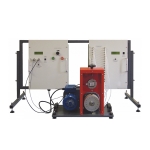
Air Bearing Apparatus
Product Code : EL-TOMP-11397
A hand-operated load control and load cell allow the user to apply and measure the load on the bearing bush.
View Details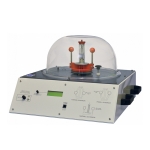
Governors
Product Code : EL-TOMP-11398
A sensor measures the position (lift) of each governor sleeve as it rises.
View Details
Journal Bearing Demonstration
Product Code : EL-TOMP-11399
This floor-standing apparatus allows students to study the performance of a journal bearing during different test conditions.
View Details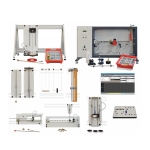
Universal Vibrations Apparatus
Product Code : EL-TOMP-11400
All experiments are large enough for demonstrations and produce accurate results, yet small enough to fi t on a classroom bench.
View Details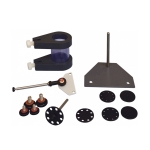
Damper Kit
Product Code : EL-TOMP-11401
Works with easily found non-toxic fluids for different damping levels.
View Details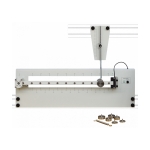
Free Vibration of Beam Spring
Product Code : EL-TOMP-11402
This product includes a beam pivoted at one end, with the other end suspended by a coiled spring. This common system appears in machines and vehicle suspensions.
View Details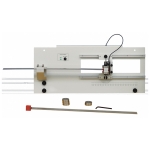
Free Vibrations of Cantilever
Product Code : EL-TOMP-11403
A beam with the mass at the end works in a similar way to a mass spring system - the stiffness of the beam simply replaces the stiffness of the spring.
View Details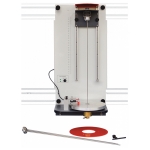
Free Torsional Vibrations
Product Code : EL-TOMP-11404
The bottom of the rod fixes to a rotor that is free to rotate.
View Details
Damper Kit For Mass/Spring
Product Code : EL-TOMP-11405
This simple piston disc and cylinder form a dash-pot damper that fits to the guide rods under the platform.
View Details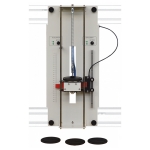
Free Vibration of Mass Spring System
Product Code : EL-TOMP-11406
Students can easily make the link to simple harmonic motion - defined as the oscillatory motion where the restoring force is proportional to the displacement.
View Details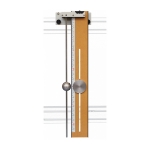
Centre of Percussion
Product Code : EL-TOMP-11407
Students find the centre of gravity of the wooden (compound) pendulum to calculate its radius of gyration and centre of percussion.
View Details
Simple and Compound Pendulums
Product Code : EL-TOMP-11408
Students test different pendulums to see how different factors, such as mass or pendulum length affect simple harmonic motion and the period of oscillation.
View Details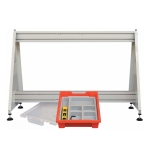
Free Vibrations Test Frame
Product Code : EL-TOMP-11410
Students, teachers or lecturers fit the parts of their free vibrations experiments to the Test Frame to study or demonstrate a free vibrations topic.
View Details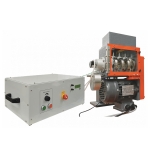
Balance of Reciprocating Masses
Product Code : EL-TOMP-11411
A bench-mounting model four-cylinder engine that shows primary and secondary forces and moments in reciprocating masses and how to balance them.
View Details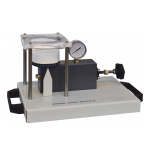
Hertzian Contact Apparatus
Product Code : EL-TOMP-11412
Students may rotate the lower pad, a pointer shows the angle of rotation.
View Details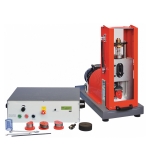
Cam Analysis Machine
Product Code : EL-TOMP-11413
The main part of the product has a precision machined heavy steel base which holds a high-torque direct-drive variable-speed motor.
View Details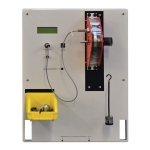
Acceleration Static Test Stand
Product Code : EL-TOMP-11414
A separate Acceleration and Static Test Stand gives extra experiments in measuring angular acceleration and static efficiency.
View Details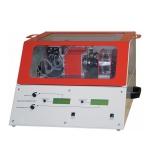
Geared Systems
Product Code : EL-TOMP-11415
Supplied with a three-shaft gear drive unit as standard, the base unit dynamically tests the gear drive and the other optional drive units.
View Details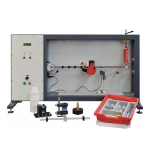
Free and Forced Vibrations
Product Code : EL-TOMP-11416
An accelerometer built into the exciter assembly works to show the phase relationship between beam displacement and acceleration.
View Details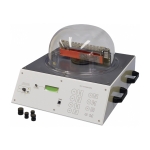
Centrifugal Force and Angular Velocity
Product Code : EL-TOMP-11418
An electric motor turns a belt that turns a turntable under the mechanism.
View Details
Whirling of Shafts and Critical Speed Apparatus
Product Code : EL-TOMP-11419
Whirling of Shafts and Critical Speed Apparatus
View Details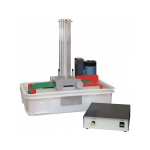
Michell Pad Apparatus
Product Code : EL-TOMP-11420
The bench-mounting unit has an aluminium plate (pad) mounted above a continuous loop flat belt.
View Details
Coriolis Force Apparatus
Product Code : EL-TOMP-11421
A benchtop base unit supporting a rotating arm on which a transparent water tank and counterbalance are mounted.
View Details