Laboratory Products
Math Lab Equipment
Biology Lab Equipment
Chemistry Lab Equipment
Hospital Lab Equipment
Water and Sanitation
Physics Lab Equipment
Engineering Lab
Science Lab Equipment
Scientific Lab Equipment
Analytical Lab Equipment
TVET Lab Equipment
- Workshop Tools
- Electrical Work Bench
- Standard Welding Equipment Set
- Welding Equipment and Workshop Lab Machine
- Plant Engineering and Welding Equipment
- Wood Workshop Portable Tool
- Woodworking Workshop Machines
- CNC Trainer Machine
- Automobile Engineering
- Plumbing Workshop Instrument
- Theory of Machine Lab Equipments
- Concrete Laboratory
- Soil Mechanics
Microscope Equipment
Lab Glassware
- Watch Glasses Soda
- Voltameter
- Stirrers
- Test Tubes and Thermometer Pockets
- Staining Jars
- Specimen Tubes and Vials
- Spirit Burners
- Screwthreads, Discs and Joints
- Screw Caps, Stoppers and Stopcocks
- Pipettes, Volumetric Flasks and Measuring Cylinders
- Funnels
- Funnels Dropping Separating
- Flasks
- Distillation
- Extractors
- Coplin Jars
- Condensers
- Chromatography Columns
- Burettes
Educational Lab Equipment
Lab Equipment
STEM Science Labs DIY Kits Manufacturer, Suppliers and Exporter in India
Educational Instrument is leading STEM Science Labs DIY Kits Manufacturer,and supplier and Exporter in India, Algeria (Algiers), Angola (Luanda), Argentina (Buenos Aires), Armenia (Yerevan), Australia(Canberra), Austria (Vienna), Bahrain (Manama), Bangladesh (Dhaka), Bhutan (Thimphu), Bolivia (Sucre), Botswana (Gaborone), Brazil (Brasília), Brunei (Bandar Seri Begawan), Montenegro (Podgorica), Morocco (Rabat), Mozambique (Maputo), Myanmar (Naypyidaw), Namibia (Windhoek), Nepal (Kathmandu), New Zealand (Wellington), Nigeria (Abuja), Oman (Muscat), Palestine (Ramallah), Panama (Panama City), Papua New Guinea (Port Moresby), Paraguay (Asunción), Peru (Lima), Philippines (Manila)¸ Portugal (Lisbon), Qatar (Doha), Rwanda (Kigali), Saudi Arabia (Riyadh), Senegal (Dakar), Serbia (Belgrade), Sierra Leone (Freetown), Slovakia (Bratislava), South Africa (Cape Town) (Pretoria) (Bloemfontein), South Sudan (Juba), Spain (Madrid), Sri Lanka (Sri Jayawardenepura Kotte) (Colombo), Sudan (Khartoum), Syria (Damascus), Tanzania (Dodoma), Thailand (Bangkok), Togo (Lomé), Tonga (Nuku'alofa), Trinidad and Tobago (Port of Spain), Tunisia (Tunis), Turkey (Ankara), Turkmenistan (Ashgabat), Uganda (Kampala), United Arab Emirates (Abu Dhabi), United Kingdom (London), United States (Washington, D.C.)
STEM Science Labs DIY Kits are educational products designed for hands-on, interactive learning in Science, Technology, Engineering, and Mathematics. Educational Instruments is an educational kit manufacturer & exporter of STEM Science Labs DIY Kits, designed for use in educational institutions such as schools, universities, TVET, research environment, and industries with the aim of helping learners create practical experiments, models, and projects from the abstract knowledge. The items covered under the category include physics, chemistry, biology, robotics, coding, and engineering whereas current stock includes atomic and molecular models, physics equipment, and astronomy models.
DIY activities enable users to construct, test, observe, and learn scientific principles personally. The DIY activity requires critical thinking, problem-solving, creativity, innovation, teamwork, getting courage and learning from errors. While selecting a kit to purchase, there are various factors to consider such as the idea behind the kit, the discipline that the activity will be conducted in, target population, purpose of conducting the activity, components, and model of the product.
How do you choose a STEM Science Labs DIY Kit?
Choose a STEM Science Labs DIY Kit by matching the kit to the scientific concept, subject area, intended learner group, and practical activity to be completed. The published category includes products covering atomic structure, molecules, ions, physics principles, wave motion, the solar system, and planisphere-based astronomy learning.
It must be decided before procurement if the need is for construction, experimentation, observation, mechanical demonstration, modeling, or some other practical exercise. In addition to this, buyers need to confirm that the correct product code has been chosen along with the quantity of the same.
Category’s description about the range of STEM topics covered by it is that it covers physics, chemistry, biology, robotics, coding, and engineering. It must, however, be remembered that all the kits cover all of the mentioned fields of STEM.
What types of STEM Science Labs DIY Kits are available?
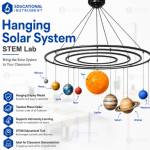
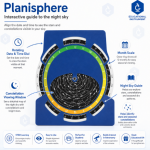
This list comprises the following types of models: atomic and molecular structures models, ion-formation models, physics apparatus, and astronomy models. Some of the named products are: Bucky Ball Model, Nuclear Reactor Model, Nuclear Fusion Model, Formation of Magnesium Oxide Ion Model, Formation of Chlorine Ion Model, Silicon Electronic Configuration Model, Helium Molecule Model, Oxygen Molecule Model, Hydrogen Molecule Model, Orbit of Atom Model, Structure of Phosphorus Model, Isotopes of Hydrogen Model, Atomic Structure of Carbon Model, Covalent Bond in Water Model, Structure of Atom Model, Newton's Second Law Apparatus, Wave Motion Apparatus, Hanging Solar System STEM Lab, and Planisphere STEM Lab.
These products offer varied opportunities for exploring scientific theories via models, apparatus, demonstrations, experiments, and projects. The buyer is recommended to consider each individual product as the capacity, material, dimensions, components included, operating conditions, and other individual characteristics of the model are not equally presented on the category page.
What subjects can STEM DIY science kits cover?
The list of possible topics for STEM DIY kits may involve physics, chemistry, biology, robotics, programming, engineering, and other interdisciplinary science areas. Currently, there are the following topics included in the existing category of published products: atomic structure, molecular structures, ion formation, nuclear science, Newton's second law, wave motion, the solar system, and astronomy based on a planisphere.
The topic needs to be chosen prior to selecting the DIY kit. If the concept of chemistry is involved, then there are such kits as magnesium oxide ions, chlorine ions, molecular structures, atomic structures, isotopes, and covalent bonding. In terms of physics, there are Newtons Second Law Apparatus and Wave Motion Apparatus. As regards astronomy, there are Hanging Solar System STEM Lab and Planisphere STEM Lab.
Since different kits vary from each other, one needs to ask for specifications regarding the specific product.
How do STEM Science Labs DIY Kits support hands-on learning?
STEM Science Labs DIY Kits support hands-on learning by allowing users to build, test, observe, and explore scientific principles through DIY projects, experiments, apparatus, and educational models. The published category states that this experiential approach is intended to deepen understanding beyond passive learning.
The category also identifies critical thinking and problem-solving, creativity and innovation, collaboration and teamwork, confidence, and a growth mindset through trial and error as associated skill-development areas.
Different products support different kinds of interaction. A physics apparatus may demonstrate a mechanical principle, while an atomic or molecular model can help represent structures and relationships that are difficult to observe directly. Astronomy models can support visual study of celestial arrangements.
The exact learning activity should always be confirmed against the individual product description and specifications.
Which STEM kits are suitable for atomic and molecular structure learning?
The listed category provides several models designed to explore the subject of atom structure, molecules, ions, isotopes, electronic configuration, and chemical bonding. They are the following: Structure of Atom Model, Atomic Structure of Carbon Model, Orbit of Atom Model, Isotopes of Hydrogen Model, Hydrogen Molecule Model, Oxygen Molecule Model, Helium Molecule Model, and Covalent Bond in Water Model.
There are also several other products such as the Silicon Electronic Configuration Model, Structure of Phosphorus Model, Formation of Magnesium Oxide Ion Model, and Formation of Chlorine Ion Model.
One should choose the model depending on the particular scientific concept taught or shown. The category page mentions the product names and codes, while the size, material used, number of pieces in the model, assembly needed, and the suitable learner level are not mentioned.
Which physics and astronomy products are included in the category?
The current category includes Newton's Second Law Apparatus and Wave Motion Apparatus for physics-related practical study, along with the Hanging Solar System STEM Lab and Planisphere STEM Lab for astronomy-related learning.
The Wave Motion Apparatus is described on the category page as providing mechanical visualization of wave propagation and fluid dynamics. The other listed products are identified by product name and code, but detailed operating specifications are not consistently published at category level.
For procurement, buyers should state the exact concept to be demonstrated, required product, quantity, expected configuration, and mandatory specifications. Any dimensions, materials, accessories, operating conditions, or other technical details not published should be obtained for the individual product rather than inferred from the category name.
What should institutional buyers include in a quotation request?
Institutional buyers should provide the product list or category, required quantity, institution name, and billing address when requesting a formal quotation or proforma invoice. For STEM Science Labs DIY Kits, including the exact product name, product code, intended activity, and any mandatory technical requirements can improve quotation accuracy.
For international orders, the Educational Instruments FAQ states that educational laboratory equipment is exported to schools and institutions in Africa, Southeast Asia, and the Middle East, with assistance for logistics, customs forms, and packaging requirements.
The company also states that live virtual demonstrations or on-site consultations can be arranged for bulk orders or sophisticated setups. Applicability should be confirmed for the specific STEM kit requirement and destination.
Can STEM kits be supplied with manuals or activity guidance?
The Educational Instruments FAQ states that Science Kits and Maths Kits contain step-by-step activity manuals, reusable parts, experiment tools, and consumables where needed. It also states that every kit or equipment has printed or electronic user manuals and safety and installation instructions, with experimentation logs or worksheets provided for relevant kits.
The applicability and exact contents should be confirmed for each individual STEM Science Labs DIY Kit because the category page does not state that every listed model contains the same manuals, experiment tools, consumables, worksheets, or accessories.
For international institutions, the FAQ also states that Science Kits, Physics Kits, and Chemistry Laboratory Equipment have experiment manuals in English and that translations can be provided in French, Spanish, and Arabic for international orders. Product-level availability should be confirmed during enquiry.
What STEM Science Labs DIY Kit types can buyers compare?
|
Type |
Key feature supported by supplied input |
Typical use |
|
Atomic structure models |
Represent atomic structures, orbits, isotopes, or electronic configuration |
Hands-on or visual study of atomic concepts |
|
Molecular structure models |
Represent named molecules and covalent bonding |
Study of molecular structures and chemical relationships |
|
Ion-formation models |
Cover magnesium oxide ion and chlorine ion formation |
Demonstration of ion-formation concepts |
|
Nuclear science models |
Include nuclear reactor and nuclear fusion models |
Model-based study of named nuclear science concepts |
|
Physics apparatus |
Includes Newtons Second Law Apparatus and Wave Motion Apparatus |
Practical demonstration of physics principles |
|
Astronomy models |
Includes Hanging Solar System STEM Lab and Planisphere STEM Lab |
Visual and practical astronomy learning |
|
Bucky Ball Model |
Listed as a separate STEM Science Labs DIY Kit |
Model-based study of the named structure |
The product types above are based on products explicitly listed in the STEM Science Labs DIY Kits category.
What selection criteria should buyers check before ordering?
|
Criterion |
What to check |
|
STEM subject |
Identify whether the requirement concerns physics, chemistry, biology, robotics, coding, engineering, astronomy, or another supported learning area |
|
Scientific concept |
Match the product to the exact concept, such as atomic structure, molecular structure, ion formation, Newton's second law, wave motion, or astronomy |
|
Learning activity |
Determine whether users will build, test, observe, demonstrate, or explore through a project or experiment |
|
Product name and code |
Specify the exact listed product and its product code where available |
|
Intended users |
Confirm whether the requirement is for a school, university, TVET institution, research setting, or industry |
|
Included components |
Request the exact component list where it is not published |
|
Technical specifications |
Confirm dimensions, materials, configuration, accessories, and other mandatory details where required |
|
Quantity |
State the number of kits or models required |
|
Manuals and guidance |
Confirm the manuals, instructions, worksheets, or experiment guidance included with the exact kit |
|
Custom requirements |
State any custom-built equipment requirement during the enquiry |
|
Export requirements |
Provide destination market and any logistics, customs-form, or packaging requirements |
These selection criteria are based on the supplied category, About Us, and FAQ information.
What manufacturer-stated certifications and standards are listed?
The Educational Instruments based in Mumbai have STEM Science Labs DIY Kit having standard and Quality Control Certifications of ISO 9001, ISO 13485, ISO/IEC 17025, NABL, CE marking, UL Listing, ETL Listing, CSA Group requirements, RoHS, REACH, ASTM standards, GLP, GMP, and FDA 21 CFR Part 820.
Explore Educational Instruments
- Home
- View All Products
- Laboratory Tenders and OEM Enquiries
- About Educational Instruments
- Frequently Asked Questions
- Contact Educational Instruments
The supplied tender page identifies Ministry of Education tenders and a range of Ministry of Education and vocational training products and materials.
Frequently Asked Questions
What are STEM Science Labs DIY Kits?
STEM Science Labs DIY Kits are educational products designed to support hands-on, interactive learning in Science, Technology, Engineering, and Mathematics through projects, experiments, apparatus, and models. The published category covers areas including physics, chemistry, biology, robotics, coding, engineering, atomic structures, molecules, wave motion, and astronomy.
What products are available in the STEM Science Labs DIY Kits category?
The published category includes atomic and molecular models, ion-formation models, nuclear science models, Newton's Second Law Apparatus, Wave Motion Apparatus, Hanging Solar System STEM Lab, Planisphere STEM Lab, and the Bucky Ball Model. Individual product codes are also published for the current listed range.
How do STEM DIY kits support practical learning?
STEM DIY kits support practical learning by allowing users to build, test, observe, and explore scientific principles rather than relying only on passive study. The category also identifies critical thinking, problem-solving, creativity, innovation, teamwork, collaboration, confidence, and learning through trial and error as associated skill-development areas.
Are atomic structure and molecule models available?
Yes. The category includes models covering atomic structure, carbon atoms, hydrogen isotopes, atomic orbits, phosphorus structure, silicon electronic configuration, hydrogen molecules, oxygen molecules, helium molecules, covalent bonding in water, and ion formation involving magnesium oxide and chlorine.
Are physics and astronomy STEM models available?
Yes. The published category includes Newtons Second Law Apparatus and Wave Motion Apparatus for physics-related study, together with the Hanging Solar System STEM Lab and Planisphere STEM Lab for astronomy-related learning. Buyers should request model-specific specifications where technical details are not published.
Are manuals or instructions included with STEM kits?
Educational Instruments states that every kit or equipment has printed or electronic user manuals and safety and installation instructions, with experimentation logs or worksheets supplied for relevant kits. The FAQ also states that Science Kits and Maths Kits may include step-by-step activity manuals, reusable parts, experiment tools, and consumables where needed.
Does Educational Instruments export educational laboratory equipment internationally?
Yes. Educational Instruments is identified in the supplied input as a Manufacturer & Exporter, and its FAQ states that educational laboratory equipment is exported to schools and institutions in Africa, Southeast Asia, and the Middle East, with assistance for logistics, customs forms, and packaging requirements.
What information is needed to request a quotation?
A formal quotation request should include the product list or category, quantity, institution name, and billing address. For a STEM kit enquiry, buyers should also state the exact product name or code, intended activity, destination market, and any mandatory technical, packaging, documentation, or custom requirements.
Request a Quote for STEM Science Labs DIY Kits
For school, university, TVET, research, industrial, institutional, bulk, tender, or export requirements, provide the required product names or codes, quantities, intended activities, mandatory specifications, institution details, and destination market.
Educational Instruments is a Manufacturer & Exporter of STEM Science Labs DIY Kits and other educational and laboratory equipment.
 (1).png)
.jpg)
 (2).png)
.jpg)
.jpg)
.png)
.jpg)
.png)
.jpg)
.jpg)
.png)
.jpg)
.png)
 (1).jpg)
.jpg)
.jpg)
.jpg)
Wave Motion Apparatus
Product Code : SCL-SSLDK-11513
The Wave Motion Apparatus is a high-caliber laboratory instrument designed to provide a clear, mechanical visualization of wave propagation and fluid dynamics.
Note:
View Details