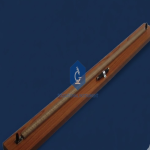
Apparatus to measure acoustic waves’ velocity in air

Product Code : SCL-ES-12786
The Apparatus to Measure Acoustic Waves’ Velocity in Air by Educational Instrument India is a reliable physics laboratory instrument designed for studying sound waves, resonance, wavelength, frequency, and the velocity of acoustic waves in air. It is ideal for school physics laboratories, college laboratories, STEM classrooms, and technical institutes where students perform practical experiments in acoustics and wave motion.
This apparatus helps students understand how sound travels through air as a longitudinal wave. By using a sound source of known frequency and measuring the wavelength or resonance position, students can calculate the velocity of sound in air. The apparatus provides a practical and visual method for connecting theoretical concepts with real laboratory observations.
Designed for educational use, the Apparatus to Measure Acoustic Waves’ Velocity in Air is simple to set up, easy to operate, and suitable for repeated classroom demonstrations. It is an excellent teaching aid for explaining acoustic wave propagation, resonance, standing waves, frequency, wavelength, and sound velocity.
Key Features
Designed for measuring the velocity of acoustic waves in air
Useful for sound wave and resonance experiments
Helps demonstrate frequency, wavelength, and wave speed relationship
Suitable for studying longitudinal waves in air
Easy to use in school and college physics laboratories
Compatible with sound sources, signal generators, microphones, and measuring accessories depending on model
Durable construction for repeated educational use
Ideal for STEM and practical physics learning
Product Specifications
|
Specification |
Details |
|
Product Name |
Apparatus to Measure Acoustic Waves’ Velocity in Air |
|
Brand |
Educational Instrument India |
|
Application |
Measurement of acoustic wave velocity in air |
|
Use |
Physics laboratory experiments and classroom demonstrations |
|
Concepts Covered |
Sound waves, acoustic waves, wavelength, frequency, resonance, standing waves, velocity of sound |
|
Wave Type |
Longitudinal sound waves in air |
|
Measurement Method |
Frequency and wavelength/resonance-based measurement |
|
Compatible Accessories |
Signal generator, loudspeaker, microphone, resonance tube, measuring scale, oscilloscope depending on model |
|
Operation |
Manual/electrical setup depending on supplied model |
|
Suitable For |
Schools, colleges, STEM laboratories, and technical institutes |
|
Category |
Physics Laboratory Equipment |
|
Recommended Usage |
Under teacher or laboratory instructor supervision |
How to Use Apparatus to Measure Acoustic Waves’ Velocity in Air
Place the apparatus on a stable laboratory table or demonstration bench.
Connect the sound source, signal generator, speaker, microphone, or resonance tube according to the experiment setup.
Set a known acoustic frequency using the signal generator or tuning source.
Produce sound waves inside the tube or measuring path.
Adjust the position of the microphone, piston, or resonance column as required.
Observe the resonance point, maximum sound intensity, or waveform response.
Measure the distance related to the wavelength, such as the distance between resonance positions or nodes.
Record the frequency and measured wavelength value.
Calculate the velocity of sound using the formula: velocity = frequency × wavelength.
Repeat the experiment for different frequencies and compare results.
After completing the experiment, switch off electrical devices and store all components safely.
Educational Importance
The Apparatus to Measure Acoustic Waves’ Velocity in Air is an important teaching aid for understanding how sound travels through air. It helps students practically verify the relationship between frequency, wavelength, and wave velocity.
This apparatus supports hands-on learning in acoustics and wave physics. Students can observe real sound wave behaviour, measure data, calculate sound velocity, and understand the nature of longitudinal waves. It also improves practical skills such as observation, measurement, calculation, comparison, and scientific analysis.
Applications
Measurement of velocity of sound in air
Acoustic wave experiments
Study of longitudinal sound waves
Resonance tube experiments
Frequency and wavelength measurement
Standing wave demonstrations
Sound wave propagation studies
Physics practical classes
STEM laboratory demonstrations
Acoustic and wave motion experiments
Safety Instructions
Use the apparatus only under teacher or laboratory supervision.
Connect electrical components only to the recommended power supply.
Keep wires and connectors properly arranged during operation.
Do not touch open electrical contacts while the apparatus is switched on.
Avoid excessive sound levels during experiments.
Handle glass or acrylic tubes carefully if included.
Keep the apparatus away from water and moisture.
Switch off and disconnect all electrical equipment after use.
Store all components in a clean, dry, and safe place.
Frequently Asked Questions
- What is the Apparatus to Measure Acoustic Waves’ Velocity in Air used for?
It is used to measure the velocity of sound or acoustic waves in air using frequency, wavelength, or resonance-based methods.
- Is this apparatus suitable for school laboratories?
Yes, the apparatus by Educational Instrument India is suitable for school physics labs, college laboratories, STEM classrooms, and technical institutes.
- What physics concepts can be demonstrated with this apparatus?
Teachers can demonstrate sound waves, acoustic wave propagation, resonance, wavelength, frequency, standing waves, and velocity of sound in air.
- How is the velocity of sound calculated?
The velocity of sound can be calculated using the formula: velocity = frequency × wavelength.
- What accessories may be used with this apparatus?
Depending on the model, it may be used with a signal generator, loudspeaker, microphone, resonance tube, measuring scale, oscilloscope, and connecting leads.
- Can students perform experiments with this apparatus?
Yes, students can perform experiments under teacher or laboratory instructor supervision.
- Why is this apparatus important in physics education?
It provides a practical way to understand how sound travels through air and helps students verify the relationship between frequency, wavelength, and sound velocity.