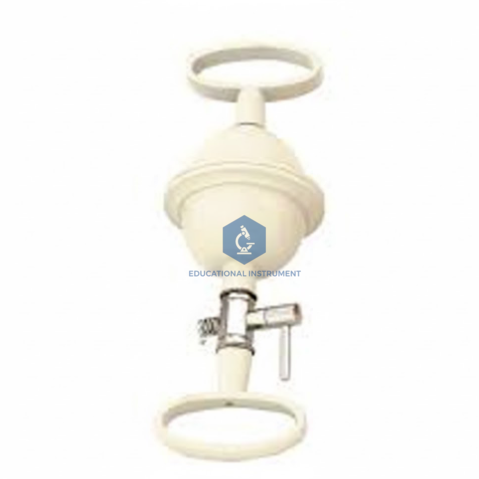
Quick Answer: The Magdebur Hemisphere is a pair of Magdeburg hemispheres, 100 mm to 125 mm in diameter, used to show the force of atmospheric pressure once the air inside is pumped out. A rubber gasket seals the rims and a chrome-plated brass stopcock with a serrated hose nozzle connects the vacuum pump.
Last updated: October 2026
Key Features
Cast iron or aluminium alloy hemispheres
Powder coated finish
Rubber gasket seal between the rims
Chrome-plated brass stopcock with serrated hose nozzle
After the hemispheres are joined and evacuated with a vacuum pump, students find they cannot pull them apart by hand, and they separate easily once air is let back in through the stopcock. The demonstration makes the size of atmospheric pressure tangible and leads into calculations of force from pressure and area.
Frequently Asked Questions
How is air removed from the Magdebur Hemisphere?
A vacuum pump is connected by hose to the serrated nozzle of the chrome-plated brass stopcock, which is closed to hold the vacuum.

.jpg)



.jpg)
 (1).jpg)
.jpg)