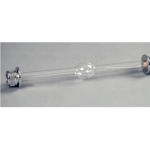
Quick Answer: Constantan Wire (100gm) is a copper-nickel resistance wire supplied as a 100 g spool. Constantan has a high electrical resistivity and a low temperature coefficient of resistance.
Last updated: October 2026
Key Features
Constantan (copper-nickel) alloy wire
High electrical resistivity
Low temperature coefficient of resistance, so resistance changes little as it warms
Ductile and oxidation-resistant surface
Supplied spooled, 100 g net
Technical Specifications
Specification
Value
Material
Constantan (copper-nickel alloy)
Resistivity
High
Temperature coefficient
Low
Net weight
100 g, spooled
About This Product
Because its resistance stays nearly steady with temperature, constantan is the usual wire for making laboratory resistance coils, rheostats and standard resistors. In practicals it is used to verify Ohm’s law, to find the resistivity of a material from length and diameter, and for metre bridge and potentiometer work. Educational Instrument can arrange export supply of the Constantan Wire (100gm) to Samoa, Bahamas, Honduras, Morocco, Niger and Laos.
Frequently Asked Questions
Why is constantan used for resistance experiments?
Constantan has a high resistivity and a low temperature coefficient of resistance, so its resistance changes very little as the wire warms during a practical.

.png)

.png)

.png)