
Seeker, Steel
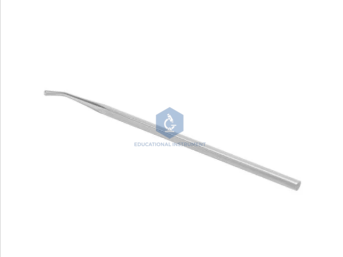
Product Code : SCL-DE-12057
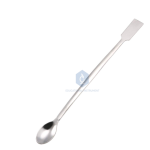
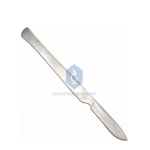
The Stainless Steel Seeker is a high-tensile laboratory instrument engineered for the non-destructive isolation of anatomical structures. Manufactured to ISO 7153-1 standards, it facilitates the identification of vascular and neural pathways in University-level medical faculties and Vocational TVET laboratories. The martensitic steel construction ensures tactile precision and resistance to high-temperature sterilization cycles.
Technical Specifications
|
Tender Specification |
OEM Technical Detail |
|
Material Grade |
AISI 410/420 Martensitic Stainless Steel |
|
Handle Type |
Hexagonal or Knurled Integral Grip for slip-resistance |
|
Tip Configuration |
Curved/Angled Pointed Seeker |
|
Surface Treatment |
Passivated Satin Finish (Reflection-Reduced) |
|
ISO Compliance Code |
ISO 7153-1 (Surgical Instruments - Metallic Materials) |
|
HS Code |
9018.90 (Instruments for medical or surgical sciences) |
|
Sterilization Compatibility |
Validated for Steam Autoclaving (134°C) |
Key Pedagogical Outcomes
Feature: Calibrated Angled Tip. Outcome: Enables students to probe and lift connective tissue without damaging underlying viscera, supporting "Gross Anatomy" structural identification.
Feature: Integral Hexagonal Handle. Outcome: Provides superior rotational control and prevents rolling on laboratory work surfaces, reinforcing "Aseptic Field Management" protocols.
Feature: Martensitic Steel Composition. Outcome: Maintains structural rigidity under lateral pressure, allowing students to accurately trace deep-tissue nerve paths in "Neurological Dissection" modules.
International Logistics & Compliance
To support global institutional procurement, all units are packed in export-grade seaworthy crating (ISPM-15 compliant). Every shipment includes a comprehensive documentation package: the Manufacturer’s Authorization Form (MAF), IQ/OQ/PQ Certification for laboratory validation, and Technical Manuals in English. The instrument features a tropicalized design, batch-tested for structural integrity in high-ambient conditions up to 45°C and 90% humidity, preventing oxidation and surface pitting during long-term storage in diverse geographic regions.
Why Source from the OEM?
Procuring directly from the OEM ensures complete vertical integration and transparency in the supply chain. Our facility manages in-house metallurgical forging and precision tip-grinding, moving beyond the "trader" model to provide instruments that are batch-tested for uniformity and metallurgical purity. This direct factory link guarantees direct factory spares availability and a sustainable lifecycle for institutional laboratory assets, which is critical for long-term tender compliance and academic reliability.
.jpg)
.jpg)