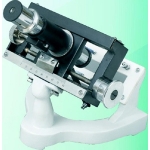
Rod for lever with stand

Product Code : SCL-MH-12639
Empower students to comprehend the foundational vectors of torque, moment arms, and equilibrium dynamics with the Precision Lever Rod with Stand Apparatus, meticulously engineered by Educational Instrument India. Serving as a crucial experimental backbone for primary mechanics and STEM coursework, this classical device allows for the precise evaluation and live tracking of Class 1, Class 2, and Class 3 lever functions.
The kit features a high-density, low-flex structural lever rod block precisely ruled with clear metric scales flanking outward from the absolute geometric center pivot point. Paired alongside a vibration-resistant, heavy stable pedestal support stand, it provides an ultra-low friction rotation interface. This design facilitates precise balance adjustments and minimizes baseline mechanical errors. It is built to stand up to the rigorous, multi-group rotational shifts characteristic of school and university laboratory workspaces.
Product Specifications
Every individual component is optimized for strict spatial metrics to keep measurement deviations well within global academic laboratory standards:
Lever Beam Composition: Premium Hardened Extruded Aluminium alloy or Dense Finished Hardwood strip featuring dual weight suspension tracks.
Dimensional Length: 500 mm / 50 cm total length (Graduated cleanly in 10 mm/1 cm metric increments extending out from 0 center pivot).
Support Pedestal Stand: Heavy-duty Die-cast Structural Iron stable base (approx. 150mm x 100mm) finished with a durable, chemical-resistant baked enamel coat.
Vertical Support Pillar: Thick Chrome-plated steel post (approx. 450mm height, 10mm diameter) offering smooth vertical slide adjustments.
Pivot Bearing Mechanism: Ultra-low friction stainless steel needle bearing or low-resistance steel pin axis assembly to isolate pure rotational kinetic profiles.
Suspension Accessories: Includes 2 x Adjustable sliding wire stirrups / load hooks for quick torque arm length modifications.
Calibration Alignment: Integrated physical counter-balance trim screws located at the absolute margins for perfect initial horizontal zeroing.
How to Use the Lever Rod with Stand Apparatus
To establish perfect horizontal equilibrium and guarantee data consistency across balance verification procedures, execute the following instructional steps:
Assembling the Support Structure: Securely thread or clamp the vertical metal support rod into the center of the heavy cast-iron base plate. Position the apparatus on a flat, vibration-free laboratory workbench.
Mounting and Zero-Balancing: Attach the lever rod onto the low-friction pivot axis at the top of the vertical column. Before adding weights, adjust the threaded trim screws at the rod margins until the beam floats perfectly level horizontally.
Configuring the Moment Arms: Slide the hanging stirrups onto the left and right sides of the lever rod. Hang targeted weights (e.g., slotted masses) onto each stirrup hook. Record the load value and the exact metric distance from the center pivot (fulcrum).
Verifying the Law of Moments: Adjust the placement distances or change weight values until the beam stabilizes horizontally. Confirm that the data balances according to the torque equilibrium equation:
Post-Experiment Cleanup: Unload all mass elements to protect the pivot axis from long-term static strain. Wipe the metallic surfaces with a soft, lint-free cloth and place the rod cleanly inside the designated storage casing.
Laboratory Vector Loading Warning: Always add mass components symmetrically and carefully to prevent the base stand from tipping. Never exceed a maximum balanced torque load of 2.5 kg on the structural rod arm. Tighten all thumb-clamping knobs securely before releasing loads to avoid sudden dropping hazards.
Frequently Asked Questions (FAQs)
Q: Can this physics kit demonstrate all three separate classes of levers?A: Yes. By altering the position of the support fulcrum pivot and configuring where the effort forces and load hangers attach, instructors can cleanly demonstrate Class 1, Class 2, and Class 3 lever functions using the standard components included in this kit.
Q: What should I do if the lever rod does not achieve a perfect horizontal zero balance?A: Check for a level table surface, then gently rotate the threaded fine-tuning balance nuts located at the outer tips of the rod. Adjusting these counter-weights inward or outward compensates for minor structural anomalies and returns the rod to a true horizontal baseline.
Q: Is the vertical pillar compatible with third-party laboratory bosses and clamps?A: Yes. The vertical steel support column features a standardized 10mm external diameter. This makes it highly versatile and fully compatible with universal bossheads, right-angle clamps, and physics components from other lab brands.
Q: Does the rod require regular oil lubrication at the center pivot point?A: No. Educational Instrument India utilizes specialized, dust-shielded dry needle pin pivots or low-friction bushings. Applying heavy machine oils or lubricants can attract airborne grit, creating friction resistance and impairing torque measurement accuracy.
Q: How can I procure replacement sliding stirrup clips if they are misplaced?A: As a full-scale institutional scientific instrument factory, Educational Instrument India supplies standalone accessory packs—including extra sliding loops, load hooks, and weights—directly through our primary inventory line