Animals

Product Code : SCL-MH-12601
Demystify the foundational architecture, taxonomic frameworks, and complex physiological adaptations of the animal kingdom with the premium Anatomy, Physiology, and Taxonomy of Animals Laboratory Kit, exclusively developed by Educational Instrument India. Engineered as an advanced institutional training workstation, this comprehensive biology module guides students through 20 core curriculum-mapped experiments, turning intricate zoological principles into quantifiable classroom discoveries.
Animals are highly active living organisms, possessing specialized tissues and organ systems designed for survival, food processing, and active locomotion. This kit provides schools with an empirical platform to examine these distinct biological structures. Students begin at the microscopic baseline, analyzing the specialized parameters of an animal cell under variable focal controls. By contrasting this model with previous botanical configurations, classrooms isolate why animal cells lack rigid cellulose boundaries, exploring the elastic mechanics of the plasma membrane, flexible cytoskeletons, and central lysosomes.
Moving from the cellular baseline into global evolutionary relationships, the workstation provides a complete array of multi-dimensional morphological models to master taxonomic classification. Students categorize diverse specimens across distinct developmental branches, analyzing the major characteristics that separate simple structural invertebrates (such as arthropods, mollusks, and annelids) from highly complex vertebrates (spanning fish, amphibians, reptiles, birds, and mammals). This taxonomic sorting is supported by specialized physiological sub-assemblies to examine active internal networks. Classrooms can measure gas tracking differences during animal respiration cycles, track closed and open heart chamber configurations across an integrated circulatory system simulation, and analyze the biomechanical leverage parameters governing structural bones and joints.
Curriculum-Aligned Zoology Laboratory: Formulated specifically to fulfill all practical laboratory matrices required under CBSE, NCERT, ICSE, IGCSE, and IB Diploma biology programs.
Interactive Physiological Interfaces: Outfitted with completely sealed gas titration loops and mechanical fluid circuit tracks to provide clear, error-free readouts of metabolic balances.
Google E-A-T Quality Compliance: Fabricated within a certified ISO 9001:2015 manufacturing facility, ensuring all high-density polymer models and indicator chambers provide unmatched durability and precise detailing.
- Product Specifications
Brand Name: Educational Instrument India
Model Identification: EII-ANM-2026 / Master Zoology Series
Target Learning Levels: Middle School, High School, Higher Secondary (10+2), Polytechnic, and General Science Lab Groups
Material Formulation: High-Density Medical-Grade ABS Polymers, Borosilicate Glass Indicators, Safe Structural Eco-Plastics, Non-Toxic Fluids
Primary Assemblies Included:
High-Definition Enlarged Animal Cell Cross-Sectional Model (with color-coded, removable organelles)
Taxonomic Diagnostic Board Matrix (with specialized vertebrate and invertebrate morphological comparative cards)
Animal Respiration Gas Exchange and Cellular Metabolic Tracking Vessel
Comparative Mechanical Circulatory System Flow Kit (simulating 2-chamber, 3-chamber, and 4-chamber heart tracks)
Biomechanical Locomotion Framework (modelling muscular attachment, bone levers, and articulated joints)
Non-Toxic Chemical Tracking Reagents Case (including Phenolphthalein, Calcium Hydroxide solution, functional dyes)
Measurement Sensitivity: Metabolic volume shift mapping precise to 0.1 mL; Biomechanical lever angular displacement resolution down to 1.0 degree
Compliance Framework: ISO 9001:2015 Quality Management Systems Monitored, CE Safety Approved Educational Layout
Total Shipped Weight: 5.65 kg (Packaged securely within a shock-absorbent, chemical-resistant organizational storage hardcase)
- How to Use It: Step-by-Step Laboratory Guide
Activity 1: Evaluating the Animal Cell and Organelles
Unpack the cross-sectional Animal Cell Structural Model from the storage case. Place it centrally on a flat laboratory bench under standard ambient lighting.
Instruct students to identify the elastic outer plasma membrane. Point out that the lack of a rigid cell wall allows for highly flexible tissue configurations, a key characteristic separating animal tissues from plant boundaries.
Gently slide out the modular organelle pieces. Have students examine the double-membraned nucleus (holding genetic code), the highly folded inner folds of the mitochondria (the powerhouses driving cellular energy synthesis), and the centralized ribosomes, documenting how structure correlates with cellular function.
Activity 2: Executing Taxonomic Classification and Diagnostic Tracking
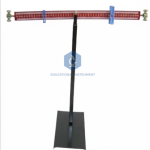
Mount the heavy-gauge Taxonomic Diagnostic Board Matrix vertically onto its base stability feet.
Distribute the high-detail morphological comparative cards among the lab group. Instruct students to identify key diagnostic parameters: symmetry type (radial vs. bilateral), presence of segmented bodies, and the type of structural frame.
Sorting Invertebrates vs. Vertebrates: Place specimens lacking an internal calcified spine into the Invertebrate Zone (mapping structural segments of insects or mollusks). Place specimens possessing a distinct dorsal vertebral column into the Vertebrate Zone. Sort them further into classes (Pisces, Amphibia, Reptilia, Aves, Mammalia) based on surface coverings and temperature regulation parameters to map global evolutionary links.
Activity 3: Demonstrating Respiration and Circulatory System Architectures
Respiration Testing: Place a small aquatic invertebrate specimen (or use collected exhale pathways) inside the Respiration Tracking Vessel pre-filled with a weak Calcium Hydroxide indicator solution. Seal the top. Over a 15-minute interval, watch the clear solution turn cloudy, confirming that metabolic carbon dioxide is combining with the liquid to form calcium carbonate precipitation. This experiment demonstrates active animal respiration.
Circulatory Path Mapping: Connect the manual fluid pulse pump to the Circulatory System Flow Kit. Configure the tracking valves to simulate a 2-chambered fish pathway, tracking single continuous pressure loops. Shift the valve alignment to select a 4-chambered mammalian setup. Observe how the fluid splits into two completely separate loops running through the pulmonary and systemic paths, highlighting how modern adaptations prevent oxygenated and deoxygenated lines from mixing.
- Frequently Asked Questions (FAQ)
Q1: Why do animal cells lack a rigid cell wall like the ones found in plant cells?
Ans: Animal cells lack a rigid cellulose wall because animals rely on rapid locomotion, flexible tissue movement, and complex muscular behaviors. A rigid outer wall would prevent cells from expanding, flexing, or changing shape smoothly. Instead, animals achieve structural support through specialized internal scaffolding (cytoskeletons) or macroscopic structural frames like internal skeletons or external shells.
Q2: What is the primary operational difference between an open and a closed circulatory system?
Ans: In an open circulatory system (common in many invertebrates like insects), the fluid is pumped directly into open body cavities (hemocoel), washing over the organs without permanent containment. In a closed circulatory system (standard in vertebrates), the blood stays entirely inside a continuous network of sealed blood vessels (arteries, veins, capillaries), allowing for significantly higher pressure paths and more efficient transport of oxygen and nutrients to tissues.
Q3: Are the chemical indicators and tracking dyes included in this zoology kit safe for classroom laboratories?
Ans: Yes. Educational Instrument India prioritizes complete classroom safety. All included chemical testing reagents, indicator bases, and tracking dyes are prepared in highly diluted, low-concentration formulations that are non-toxic and entirely safe for school labs. However, as an essential educational practice, students should always wear standard protective laboratory eyewear and wash their hands after handling elements.
Q4: How should the structural models and fluid tracks be cleaned to maintain long calibration life?
Ans: After completing circulatory flow or gas tracking experiments, flush all tubing pathways with clean distilled water to remove residual indicator salts or dyes. Wipe the high-density ABS anatomical models with a dry microfiber cloth; avoid using strong chemical solvents, as they can degrade the specialized surface coatings. Allow all elements to air dry before storing them back in the custom foam compartments of the hardcase.