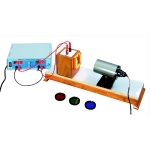
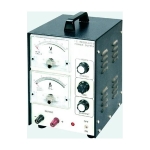
Quick Answer: The UJT Characteristics Apparatus is a trainer for plotting the characteristics of a unijunction transistor, including its peak and valley points and negative resistance region. It has two variable regulated DC supplies: 0–10V for the emitter and 0–30V for the base.
Last updated: October 2026
Key Features
Variable regulated emitter supply (VEB), 0–10V DC
Variable regulated base supply (VBB), 0–30V DC
Voltage meters with 10V / 30V DC ranges; ammeter 0–50mA DC
UJT mounted with a heat-sink interface
4mm shrouded, colour-coded sockets on a Bakelite panel with silk-screened circuit schematic
Technical Specifications
Specification
Value
Emitter supply (VEB)
Variable DC regulated, 0–10V DC
Base supply (VBB)
Variable DC regulated, 0–30V DC
Voltage meters
10V / 30V DC ranges
Current meter
0–50mA DC
Sockets
4mm shrouded, colour-coded
Panel
Bakelite with silk-screened circuit schematic
About This Product
With the base supply set, students raise the emitter voltage and record the emitter current to trace the UJT curve. The readings locate the peak and valley points and show the negative resistance region that suits the device to switching circuits. Enquiries from Egypt, Belize, Mongolia, Luxembourg, Seychelles and Comoros for the UJT Characteristics Apparatus receive an export quotation.
Frequently Asked Questions
What does the UJT Characteristics Apparatus measure?
It is used to plot the characteristic of a unijunction transistor, locating the peak and valley points and the negative resistance region, with separate emitter and base supplies.

.png)
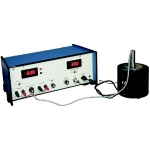
.png)

.png)